



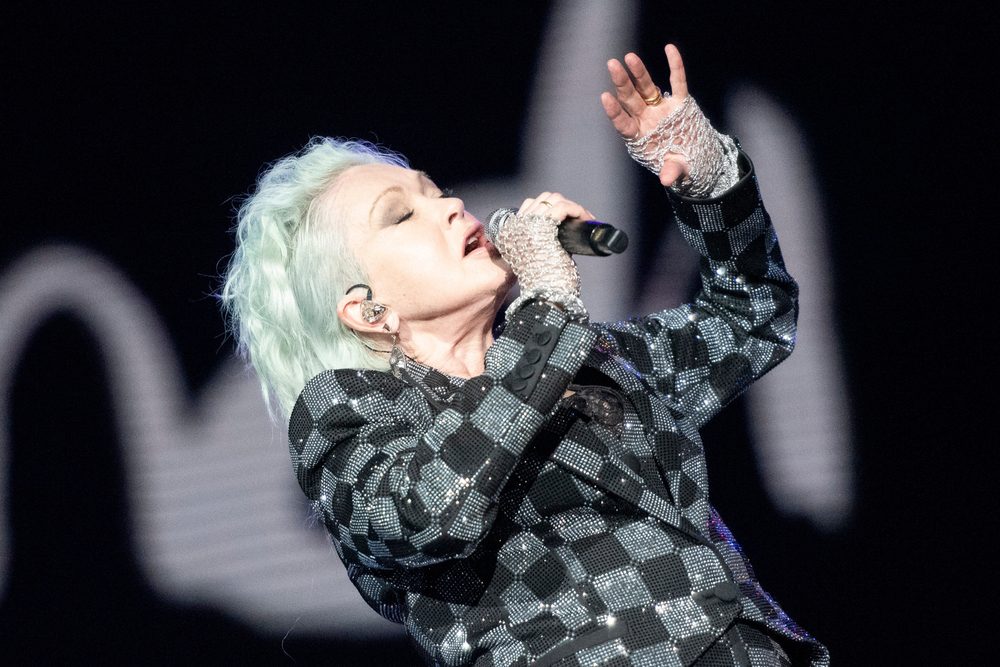
Pop Artistry in Motion: Cyndi Lauper’s Dazzling Video Evolution
As MTV flickered into American homes in the early ’80s, one technicolor force emerged to reshape music video culture: Cyndi Lauper. With neon hair, punk-inflected fashion, and an instinct for theatrical storytelling, she turned three-minute promos into pop-art performances. From risqué satire to tear-streaked ballads, Lauper’s videos didn’t just complement her songs; they elevated them.
9. “I Drove All Night” (A Night to Remember, 1989)
Highways and Heartbeats
In stark black and white, “I Drove All Night” painted Lauper as a noir heroine on a solitary road trip through longing and obsession. Originally written for Roy Orbison, Lauper’s version hit first, and the video distilled her late-’80s maturity: high fashion, emotional grit, and stylized isolation. It marked a moody transition from playful rebel to refined auteur.
Watch For: Dreamlike dissolves, haunted motels, and Lauper’s expressive restraint.
8. “What’s Going On” (True Colors, 1987)
Pop With a Conscience
Reimagining Marvin Gaye’s 1971 protest classic, Lauper layered Cold War unease and social unrest into a video full of global imagery. Scenes of protest, poverty, and resilience offered a sobering contrast to the glossy MTV fare. While the cover charted modestly, its visual message was a clear pivot toward activism.
Watch For: Stark global juxtapositions and Lauper’s direct gaze, asking, not telling. Watch the video here.
7. “Change of Heart” (True Colors, 1986)
Backstage Energy, No Frills
No heavy concept, no elaborate set, just Lauper roaming London streets and lip-syncing beside the Thames, backed by a stripped-down dance crew. Shot quickly on the fly, the video captured the restless electricity of real life and countered the era’s scripted polish.
Watch For: Snapshots of mid-’80s London and The Bangles on backing vocals.
6. “True Colors” (True Colors, 1986)
Soft Light, Strong Message
Eschewing theatrics, the video relied on minimalism, soft-focus shots, symbolic natural imagery, and children in diverse groupings. It became an LGBTQ+ anthem, even before Lauper would formally launch the True Colors Fund to support queer youth.
Watch For: Bare sets, tender close-ups, and Lauper’s vulnerability center stage.
5. “The Goonies ‘R’ Good Enough” (The Goonies soundtrack, 1985)
Cross-Promotion Mayhem
This two-part epic doubled as a kid-friendly fever dream: pro wrestlers, pirates, cameos from The Goonies cast, and product placement galore. It was chaotic, absurd, and totally unforgettable—MTV meets Saturday morning cartoons.
Watch For: Roddy Piper’s villainy, arcade cabinet heroics, and Spielberg-level excess.
4. “All Through the Night” (She’s So Unusual, 1984)
Dreamy Detour
A cooler, more introspective entry, this video dropped Lauper’s zany side for mood lighting and slow fades. It echoed the track’s nocturnal melancholy, trading in flamboyance for soft-focus yearning.
Watch For: Lauper in silhouette, neon nightscapes, and low-key heartbreak.
3. “She Bop” (She’s So Unusual, 1984)
Wink-Worthy Provocation
Playful on the surface, radical underneath. “She Bop” snuck female sexuality onto daytime TV with euphemistic road signs, cartoon nuns, and slot-machine metaphors. It was cheeky enough for kids to dance to, yet scandalous enough to earn a spot on the PMRC’s “Filthy Fifteen.”
Watch For: “Masterbingo” cards, gas station double entendres, and Lauper grinning through the controversy.
2. “Time After Time” (She’s So Unusual, 1984)
Ballad as Short Film
A gentle breakup is rendered as a tender road movie. The video, featuring Lauper’s then-boyfriend David Wolff, blends domestic stillness with departure and return. It’s unforced emotion and low-budget charm captured hearts beyond pop audiences.
Watch For: Train stations, diner booths, and Lauper quietly packing a suitcase.
1. “Girls Just Want to Have Fun” (She’s So Unusual, 1983)
Rebel Riffs and DIY Feminism
The breakout smash that defined a decade. Directed by Edd Griles, the video was a campy, candy-colored celebration of autonomy and joy. Featuring pro wrestler Captain Lou Albano as Lauper’s dad and real-life friends as backup dancers, it redefined fun on women’s terms and helped cement MTV’s visual language.
Watch For: Pillow fights, neon makeup, and that final street-dance crescendo.
Legacy in Living Color
Lauper’s videos didn’t just reflect her eccentricity—they forged new paths for representation, storytelling, and genre fusion. From whimsical rebellion to earnest introspection, she proved that pop didn’t have to choose between fun and depth. She could—and did—have it all.